

So when you’re researching food stuff and you come across some items that are, well, different. Not the sort of things that you’d cook, or serve, or eat yourself. These items are fascinating. And we have always felt that we should play around with them a bit, prepare them, try them out… So here we go. We wrote three of the them a few weeks ago, and here are the rest. Simmering strangely but importantly for you to try out. Let us know what you reckon :)
Egusi and Goat Soup!!
Serves 4
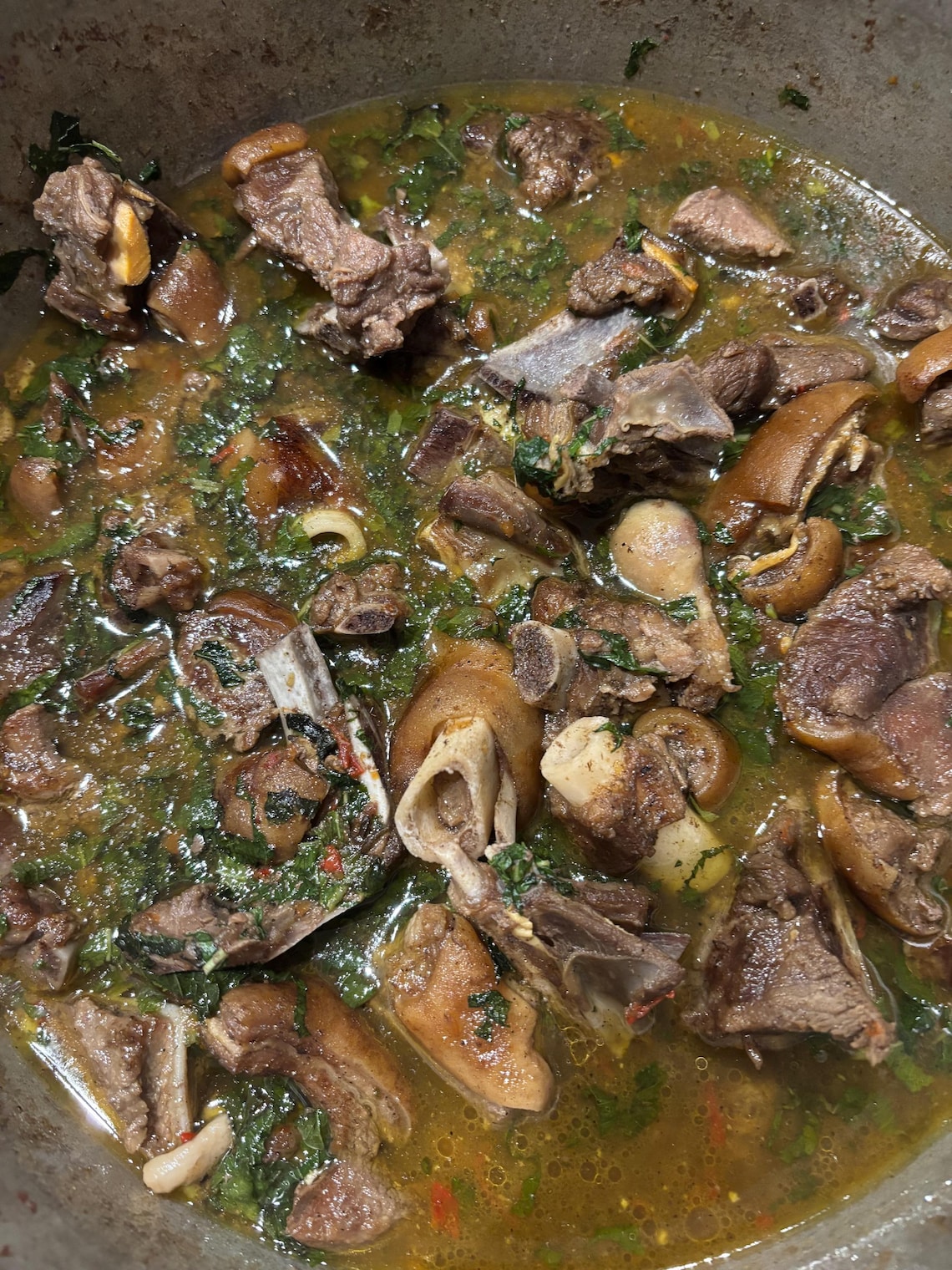
Egusi is everywhere in Peckham, and is actually a really useful thickener. The word refers to the seeds of any of quite a large number of pumpkins/gourds: they are enjoyed as they are, perhaps roasted and salted, but more often ground and used to add substance to soups and stews. It took us years to find the courage to play with them – which is daft because Mr. S (being Middle Eastern) is an averred parrot and snacks on all the seeds. This is a recipe that I cobbled together mostly* from random conversations in various Peckham grocers: goat is authentic and very tasty, but feel free to use chicken (or any other meat). In Nigeria, whence the practice of using the seeds in food originates, egusi soup is usually made with dried fish as well: we have subbed fresh prawns as they are easier to find/less smelly.
Ingredients:
400g cubed goat, (shoulder or leg are appropriate here)
ground nut (peanut) oil for frying
2 onions, peeled and sliced
4 cloves garlic, peeled and minced
1 Scotch bonnet, finely chopped
150g roasted, ground egusi seeds (or substitute regular pumpkin seed kernels)
1 tablespoon tomato paste
1 400g tin chopped tinned tomatoes
600ml chicken stock (or use the ubiquitous Maggi cubes)
1 teaspoon iru**
200g spinach or other green vegetables, washed and shredded
salt to taste
hard boiled eggs and extra chillies for garnish
Fry the goat meat in hot ground nut oil and reserve. In the same pan fry the onion, garlic and chill, stirring well, before adding the egusi powder. Continue to stir so that the egusi gets coated in the oil, and then add the tomato paste, tomatoes and stock. Bring to the boil, add the sealed goat, and simmer for about an hour or until the goat is tender. Add the iru (soy sauce) and spinach, cook for a further five minutes, and then season to taste.
Serve garnished with egg slices and raw chillies.
*I also owe a debt of gratitude to the Congo Cookbook, which I have used on and off for years for research. Some amazing dude called Ed Gibbon has gathered together an astonishing selection of archaic recipes from across the whole of Africa. It started as a website, but is now available as a print-on-demand book. You want a Victorian recipe for iguana? Elephant? Ed’s got you covered.
**a condiment made from fermented locust beans. We used soy sauce instead.
Birds’ Nest Soup!!!
Serves 2
Yup – this is really a thing. An expensive, hard to find thing. Made out of real birds’ nests.
The birds in question are swiftlets – black, white and red, with the red being most highly prized. They make their nests in caves, not out of twigs and dried leaves, but out of their saliva: the saliva has particularly gummy properties, and dries almost immediately. Gathering the nests is a perilous task as the caves are often high up, and this contributes to the hight price tag: a kilo of the stuff costs up to a whopping £4000.
The Chinese believe that the nests are full of health-giving properties: it is meant to be good for fertility (male and female) and helping the skin heal, amongst other things.
The birds’ nests need to be cleaned thoroughly: this is best done by soaking them in cold water for a few hours. They are mostly made into a sweet soup (as per our recipe below) – although they can be cooked in chicken broth as well.
Ingredients:
15g dried birds’ nests, soaked as above
2cm fresh ginger, peeled and chopped
1 tablespoon ‘rock sugar’ (unrefined sugar like the Iranian nabat)
knob of ginkgo biloba or ginseng (both are used as flavouring and for their extra health benefits)
handful of jujube (or use goji berries)
200ml coconut milk
200ml water
Place all the ingredients in a round pyrex-ish bowl, and set them up over a pan of boiling water. The double boiler thing is because the nests are so fragile. Cook this way for about thirty minutes, and then serve.
Medieval Beer Soup
Serves 2
(Great photo of Mr. and Mrs. S + Percy the Cat, preparing our beer soup natch)
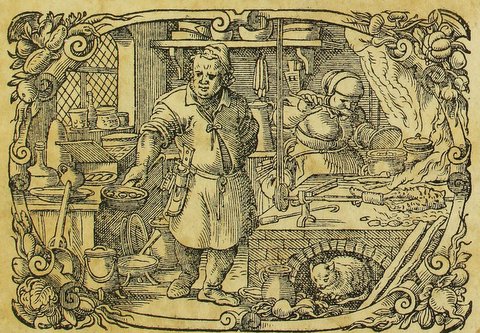
I would like to think that this is the creation of the same naughty monks who wrote the original Carmina Burana… There is no doubt that beer (or small beer i.e. with lower alcohol) was a popular breakfast bevvie (esp in the monasteries of the time). And there are all sorts of sketchy references to beer soup as the first meal of the day. Frederick the Great seems mostly to have subsisted on the stuff.
It is definitely Germanic in origin, although most of Scandinavia seems to have some sort of recipe for beer and rye bread soup.
This is a cobbling together of a few old recipes. The results are at best weird, but I dare say the average medieval man about town would say the same of granola. I really don’t recommend this for breakfast either, unless perhaps you are on a stag weekend.
Ingredients:
1 tablespoon butter
1 tablespoon flour
pinch of grated nutmeg
2 cloves
pinch of ground ginger
500ml Trappist beer (or maybe a chocolate stout)
2 teaspoons brown sugar
50g raisins
2 eggs, whisked in a bowl
100ml cream
Melt the butter in a pan and add the flour, mixing well to form a roux. Add the spices, followed by the beer, stirring well to amalgamate. Next stir in the sugar and raisins. As the soup thickens, pour a little of it on to the beaten egg, mix well, and then tip it back into the soup. Finally add the cream, cook until the soup is just before the boil, and serve. It seems quite common to pour the soup over rye bread, but we suggest you just have bread as a side.
And there we go!